The Repair Table Where a Broken Thing Is Only the Beginning
Started in Amsterdam by Martine Postma, Repair Cafés make room for people to mend everyday belongings—and learn from the person beside them.
By Maya Lindqvist · Staff writer
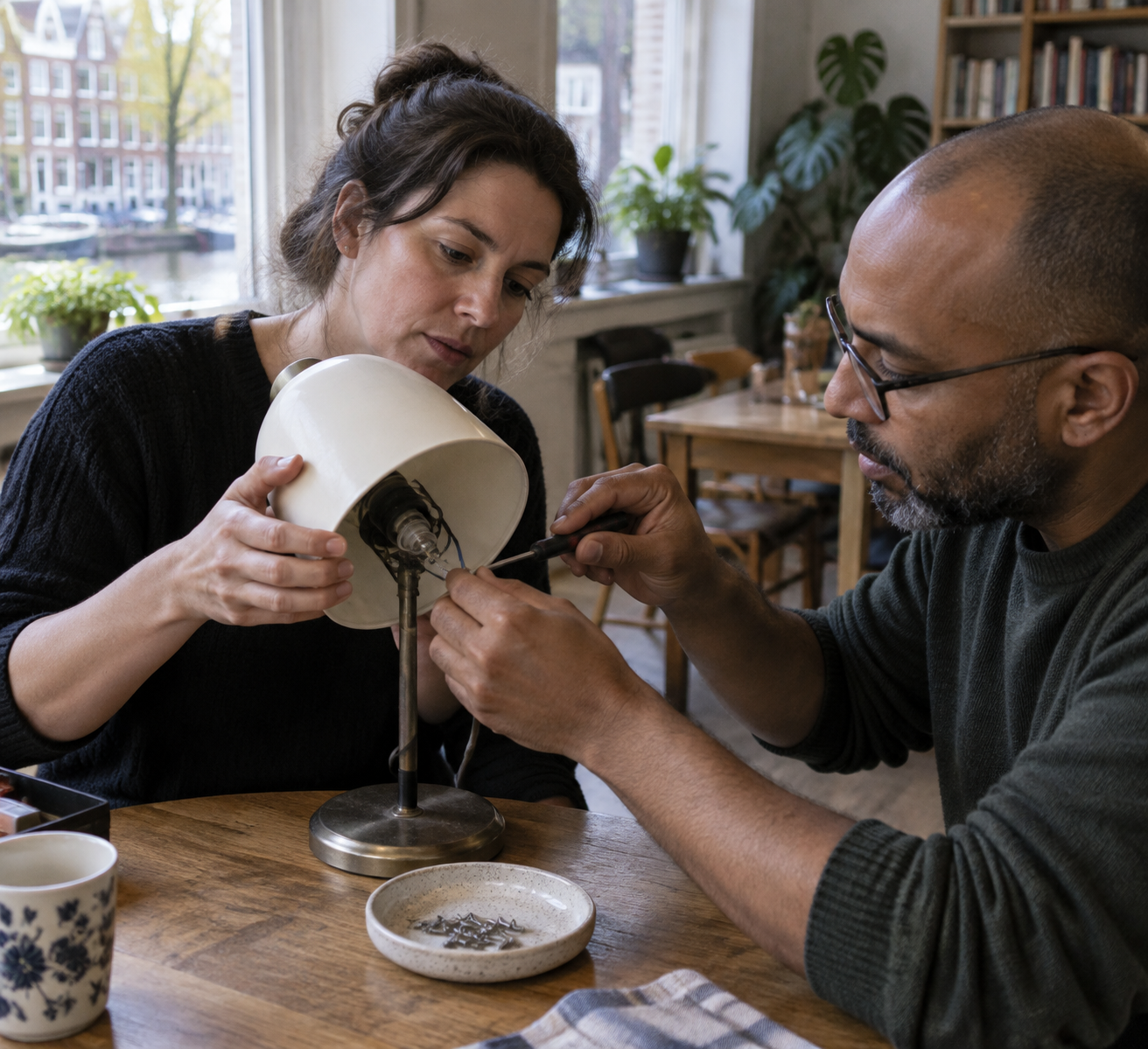
A broken lamp presents a surprisingly awkward decision: find someone to repair it, attempt the job yourself, or throw away an object that may have only one faulty part. In Amsterdam, Martine Postma helped make a fourth option available. Bring it to a table where someone with the right skills will look at it with you.
Postma, a Dutch journalist with an interest in sustainability, organised the first Repair Café in Amsterdam on October 18, 2009. Its premise was practical: people could bring damaged belongings and work alongside volunteer repairers, free of charge. The idea subsequently spread beyond the Netherlands through independently organised local groups.
The name suggests coffee, but the work calls for sewing kits, screwdrivers and a willingness to investigate. Depending on the volunteers available, a session might accommodate torn clothing, troublesome electrical appliances or a bicycle in need of attention. Not everything can be accepted, and not everything that reaches the table can be saved.
That limit is part of the model’s credibility. A missing spare part or a casing that cannot be opened safely can stop a repair, however patient the person attempting it. Discovering why something cannot be fixed is still different from discarding it without knowing what went wrong.
Just as important, the owner is invited to participate rather than simply leave an item at a counter. Watching someone trace a fault or reinforce a seam makes a normally hidden skill visible. The encounter gives a person somewhere to ask the small questions that instruction manuals tend to miss.
Repair Cafés offer a place for useful knowledge to pass between neighbours, one object at a time. When a repair succeeds, the result is often modest: a working switch, a secure handle, a seam that holds. Someone carries home the thing they already owned.